Red Light Therapy: the 2026 LED Mask Buying Guide
A $330M market in 2026, +172% YoY search. How to sort between a $400 CurrentBody and a $30 Amazon knock-off — and what the science actually supports.
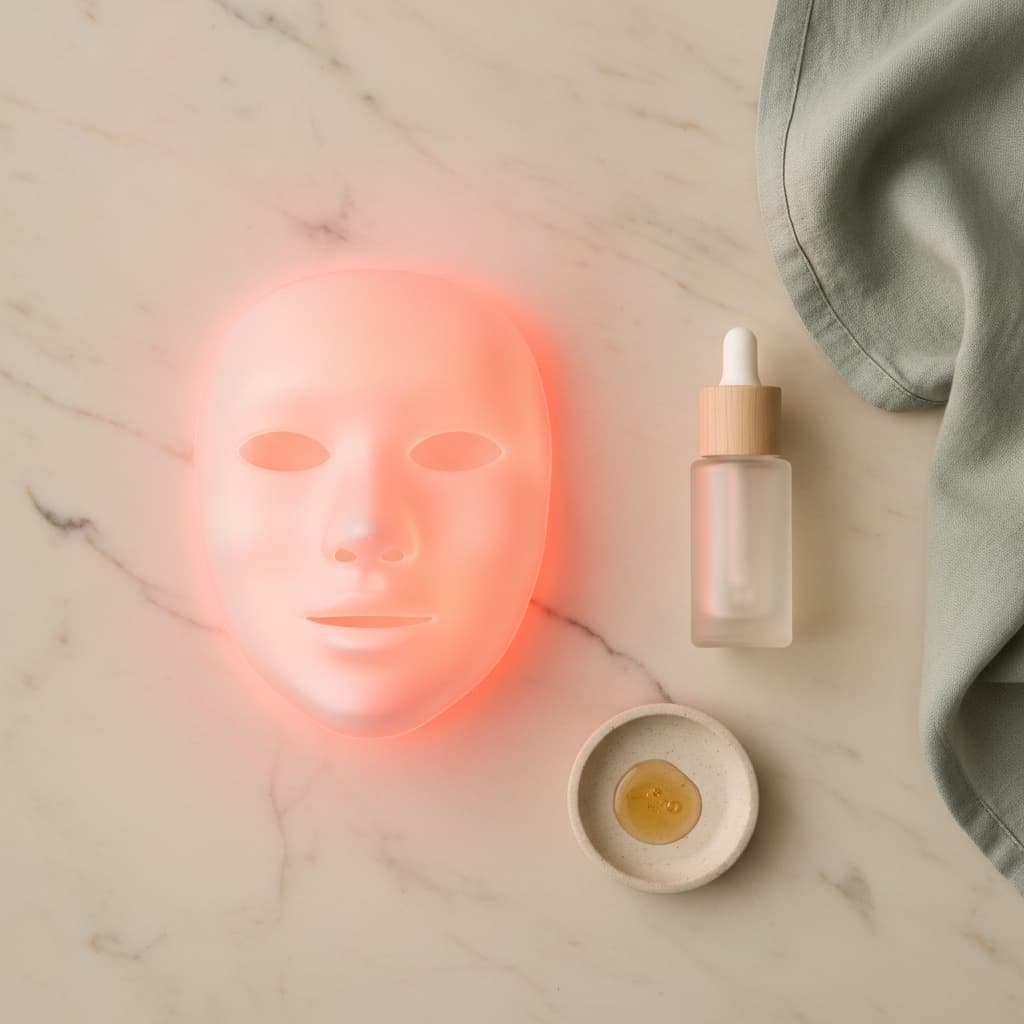
The at-home LED mask market crossed $330 million in 2026, growing 11.9% annually. The beauty-tech star is no longer the serum or retinol — it's the red light mask you wear ten minutes in the evening while you scroll. But between a $400 CurrentBody and a $30 Amazon knock-off, how do you sort? We dug into what the science actually supports.
The principle: what red light does (and doesn't)
Photobiomodulation uses precise wavelengths — typically 630-660 nm for red, 850 nm for near-infrared — that penetrate the epidermis and stimulate skin cell mitochondria. In practice: more ATP produced, more collagen synthesized, faster healing. Clinical studies show "modest but measurable" improvement in fine lines, texture and redness after 8 to 12 weeks of regular use.
What you absolutely need to check before buying
Four technical criteria that separate a real LED mask from a gadget with diodes.
1. LED count. Below 100 LEDs, coverage is too spotty. Aim for 200 to 700 LEDs evenly distributed across the mask.
2. Actual wavelengths. The packaging should specify 630/660 nm for red — not just "red LED". Beware of marketing fog.
3. Power density (irradiance). Ideally 30 to 100 mW/cm². Below that, the biological effect is too weak.
4. Certifications. FDA-cleared (US) or medical CE (EU) — not just consumer-grade CE.
“An LED mask without documented irradiance is a carnival mask with diodes.”
The models we looked at carefully
CurrentBody Skin Series 2 remains the reference — 132 LEDs, dual wavelength 633 + 830 nm, FDA-cleared, around $400. The Solawave Wand is the compact daily-use option without commitment. SpectraLite FaceWare Pro offers an intensive three-minute treatment with high irradiance. At the other end, Chinese masks at $30-50 almost never document their specs: we don't recommend them.
US availability for these top-tier brands is strongest through their own websites or Sephora rather than reliably through Amazon. For a $200-400 investment, we recommend buying direct from the official retailer.
The routine that maximizes benefits
LED doesn't replace anything — it amplifies. The standard routine: gentle cleanser, then essence or toner, then LED session ten minutes, then serum, then moisturizer, then SPF first thing the next morning (because stimulated skin is more UV-sensitive). Absolutely no retinol or acids the evening before or the morning of LED — combined photosensitivity can trigger irritation.
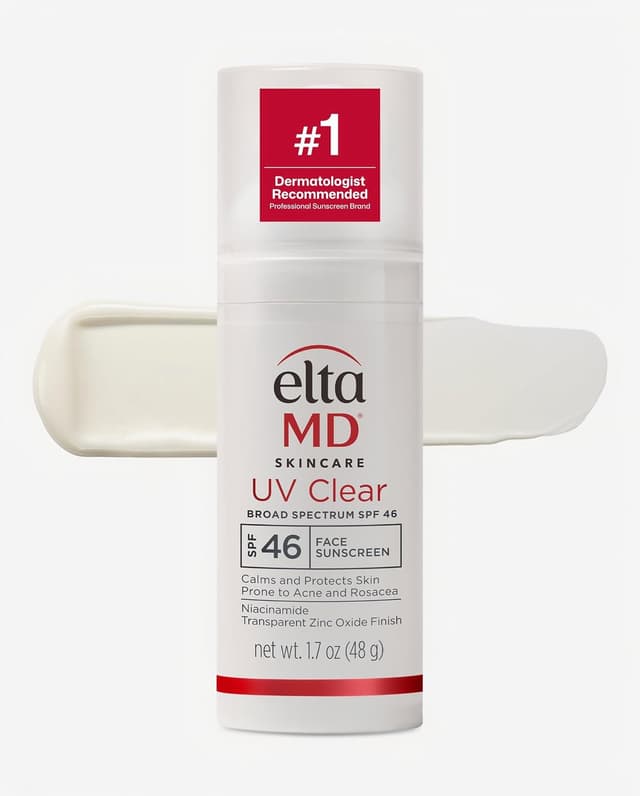
EltaMD UV Clear SPF 46
The dermatologist-recommended daily face sunscreen: zinc oxide with niacinamide, invisible on skin and safe for breakout-prone faces.
Is it worth the investment?
Honestly: yes for mature skin, hormonal rebounds, or persistent redness. Not for young healthy skin trying to "prevent" — the effect is too subtle for the price. And definitely not for active acne treatment: red light doesn't act on P. acnes — that's blue light (415 nm), and combination masks are often weaker on each wavelength separately.