Pimple Patches All Do the Same Thing — Except in One Respect
It's one of the best-selling beauty products in the world. And the difference between the five-dollar box and the thirty-dollar one isn't where you'd look for it.
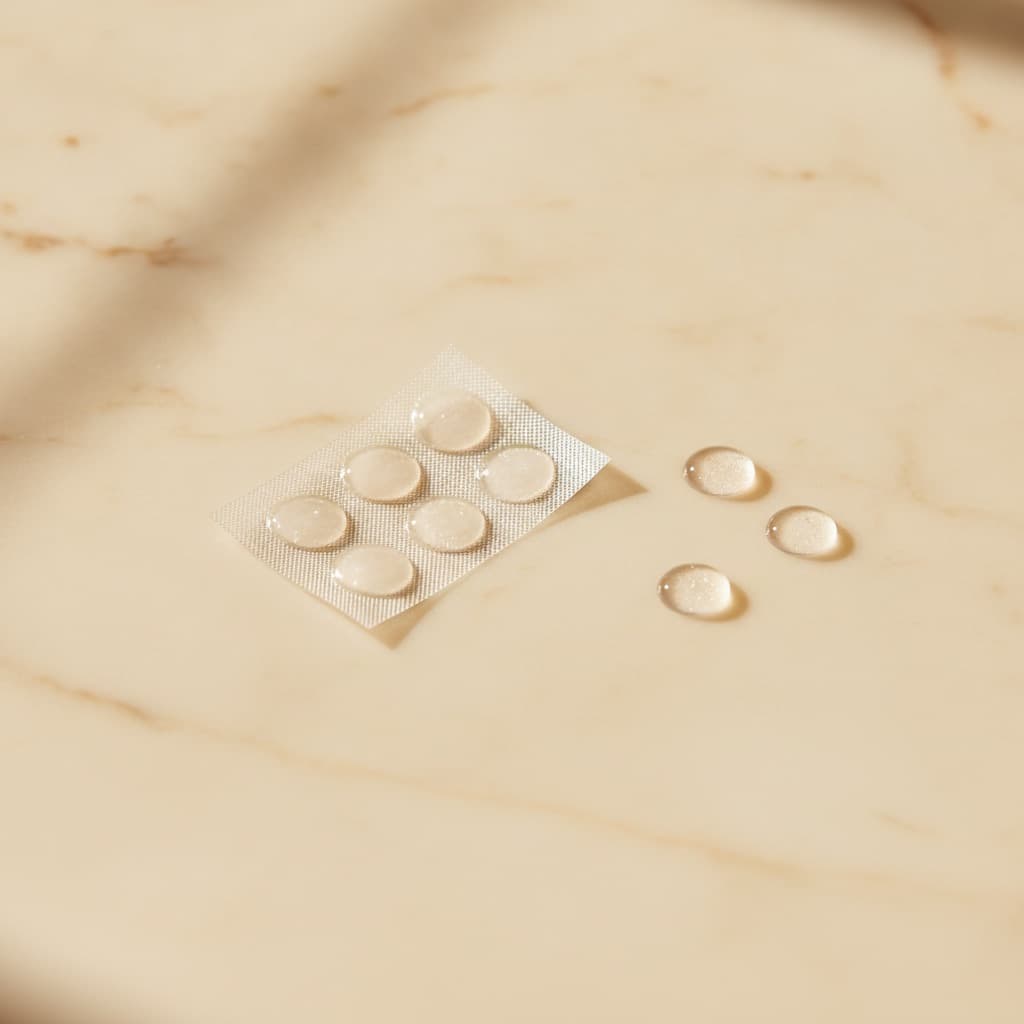
The pimple patch has become an accessory as much as a treatment — worn out to dinner, sold as yellow stars, permanently parked in Amazon's beauty top ten. What the enthusiasm skips over is that nearly all of these products do exactly the same thing, using exactly the same material.
What a patch does, and what it doesn't
A pimple patch is a disc of hydrocolloid. It's an absorbent gel borrowed from medical wound dressing: placed over an open lesion, it creates a moist sealed environment, draws out fluid, and turns white as it fills. That's the whole mechanism.
Which implies a limit nobody prints on the box: a patch only works on a whitehead that has come to a head, with fluid ready to leave. On a closed bump, a deep red spot or a cyst, nothing will happen at all — there's nothing to absorb. That's the leading cause of disappointment, and it has nothing to do with which brand you bought.
Second limit: this doesn't treat acne. It shortens the end of one spot and it stops you squeezing, which prevents the scar. That's genuinely worth something, but it's a dressing, not a course of treatment.
Why they're nearly all equivalent
Hydrocolloid is hydrocolloid. All three in this comparison are sold as 100% pure hydrocolloid with no added actives, and that's what to look for: the versions spiked with salicylic acid or tea tree add an irritation risk on already-damaged skin for a benefit nothing demonstrates.
The real differentiator is the adhesive. A patch that peels off at three in the morning has absorbed nothing, and this is where Mighty Patch earns its reputation: it holds until you wake up, even if you sleep badly. It's an unglamorous selling point, and it's the only one that changes the outcome.
“A pimple patch can't be judged on its formula, because it doesn't have one. It's judged on whether it's still there in the morning.”
What actually separates them
COSRX plays volume and sizing. Three diameters in one box matters more than it sounds: a twelve-millimetre patch on a tiny spot is a visible white dot for nothing, and the reverse leaves the lesion sticking out past the edge. On price per patch it's also comfortably the most sensible of the three.
Hero Mighty Patch bets everything on consistency. One size, a better adhesive, and a manufacturing reliability that explains why it became the benchmark others get compared to. If you're buying one box and you want it to work the first time, this is it.
Starface takes a genuinely different angle, and not just an aesthetic one. The yellow star is meant to be seen, so it gets worn in daylight — and more usefully, it keeps reminding you it's there. The real benefit is that it makes absent-minded picking impossible. It's expensive per patch, and it's the only one whose usefulness goes beyond the hydrocolloid.
The rule that matters more than the brand
Clean, completely dry skin, and the patch goes on before everything else. Applied over a serum, a moisturiser or a trace of cleanser, the adhesive won't grip, and you'll find the patch on your pillow regardless of brand. It's the most common mistake, and it cancels out everything else.
Then patience. A patch applied too early on a spot that hasn't come to a head does nothing, and plenty of people conclude the product is bad when the timing was bad. Wait for the head to form, apply at night, remove in the morning. One round is enough in the large majority of cases — if the patch comes off still clear, there was nothing there to take.