Microcurrent: What You're Really Renting for $250
It's the one at-home device category with a plausible mechanism behind it. That doesn't mean you get to keep the result.
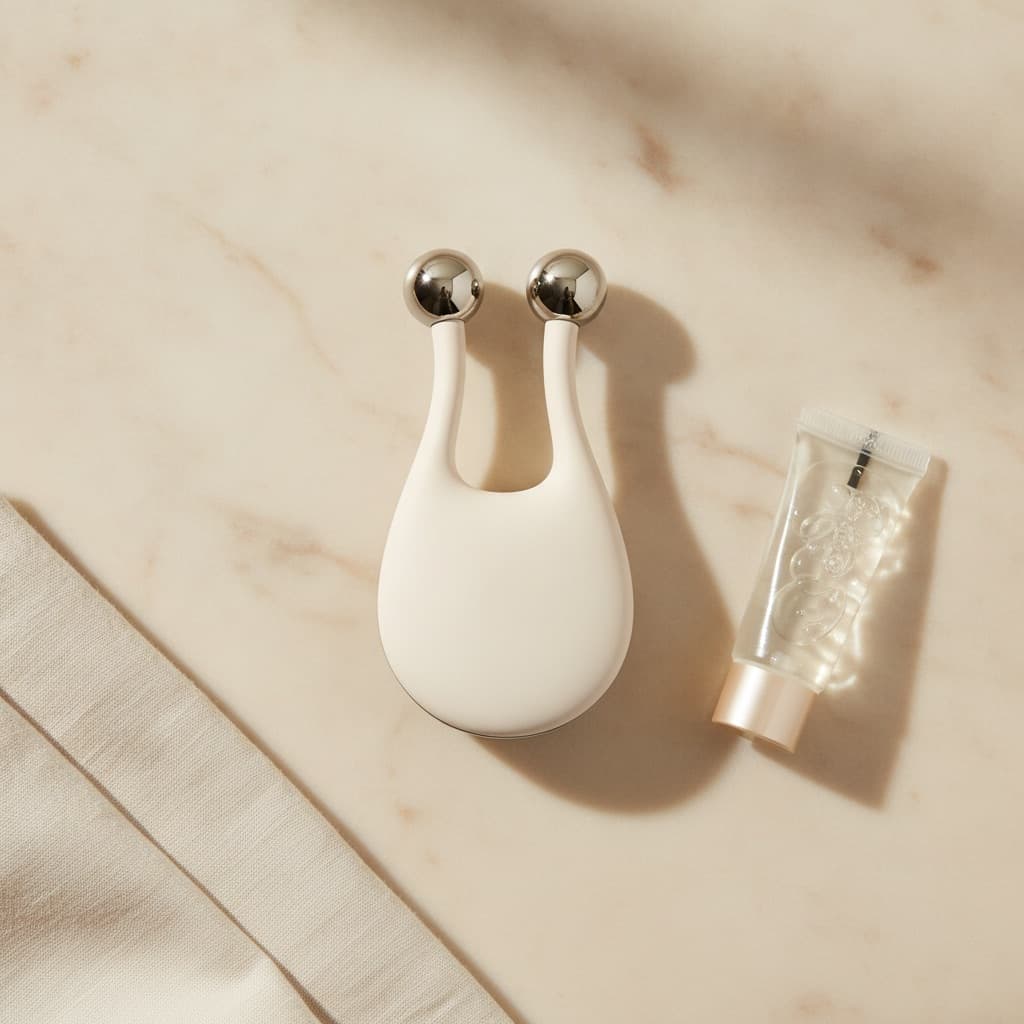
Microcurrent is the one at-home device category with a plausible mechanism behind it. Low-level electrical current stimulates the facial muscles, the same way a physiotherapist's TENS unit works on a shoulder — it isn't light therapy hoping to reach a cell, it's a muscle contracting because you told it to. That's why the results are real, and also why they don't stay.
What it actually does
You are toning muscle, not remodelling skin. The lift you see after a session is a contracted muscle holding a slightly different position, and it behaves exactly like the rest of your body: it responds to training and it detrains when you stop.
The research bears this out and stops short of the marketing. The longest follow-up runs twelve weeks, and the effect fades once treatment ends — most users notice the contour softening within four to six weeks of stopping.
That's not a reason to avoid it. It's a reason to know what you're buying.
“You're renting a contour, not buying a facelift. That distinction decides whether a two-hundred-and-fifty-dollar device is a good purchase or an expensive drawer ornament.”
The cost nobody puts on the box
Microcurrent doesn't work without conductive gel, and the gel runs out.
Every device needs it — the current has to travel through something, and dry skin won't conduct. Brand gels are priced accordingly. If you use the device as intended, five sessions a week to build and then two or three to maintain, you'll go through it steadily, and that cost never ends.
The workaround is well known and slightly unglamorous: plain ultrasound gel, the kind used for scans, costs a few dollars for a large bottle and conducts at least as well. It has no skincare pretensions and no hyaluronic acid, which is the entire reason it's cheap. Apply generously without doing the mental arithmetic — that's the point.
Budget the device and the gel together, or you'll do the maths after the fact.
The three worth knowing
NuFACE Mini+ is the category's reference point, and the one that most deserves a caveat. The brand is FDA-cleared and built with aestheticians, and the Mini+ is the version to start with rather than the full Trinity — same current, smaller head, lower price. But it carries the weakest Amazon rating of the three at 3.7 stars, against 4.2 for both FOREO devices, and it's the second most expensive at around $250. Read the recent reviews before committing: battery life and marketplace authenticity come up repeatedly.
FOREO Bear 2 takes the opposite approach: app-guided, sleek, with sensors that adjust intensity to your skin. It's the one that feels modern and the one people actually pick up, which matters more than specifications in a category that only rewards consistency.
FOREO Bear mini is the entry point, though the word is relative: at roughly $219 it costs nearly as much as the NuFACE. Smaller, fewer intensities, same 4.2-star rating as its bigger sibling. Genuinely useful if you want to find out whether you'll keep the habit — but understand that there is no cheap way into this category.
Try the free version first
Before spending anything, spend two weeks doing it by hand. Lymphatic drainage and contour massage address a large part of what people buy microcurrent for — morning puffiness, a slack jawline after a bad night — and they cost nothing. Our lymphatic drainage guide and the three-minute puffy eyes routine cover both.
If you do them for a fortnight and stop by day four, you have your answer, and it saved you somewhere between two and three hundred dollars. Microcurrent asks for more discipline than manual massage, not less.
If you keep it up and want more than massage can give, then the device makes sense — and you already know you'll use it.
One last thing
Skip it entirely if you're pregnant, have a pacemaker, epilepsy, or metal implants in the face. This isn't legal boilerplate: the contraindications are real and they're the reason these devices carry medical clearances at all.