Best Moisturizers for Combination Skin: The Ones That Balance
Finding hydration that doesn't overwhelm your T-zone while keeping dry patches at bay — it's possible.

- ~$34SeeClinique Dramatically Different Moisturizing GelOur pickoil-free gel for combination to oily skin, the highest-rated
- ~$20SeeNeutrogena Hydro Boost Water Gel (starter kit)the accessible hyaluronic-acid classic, now refillable
- ~$31SeeBioderma Hydrabio Gel-Crèmefor combination skin that is also dehydrated and sensitive
- ~$67Seebelif Aqua Bombcooling niacinamide + squalane gel, the premium pick
- ~$7SeeThe Ordinary Natural Moisturizing Factors + HAto layer underneath when skin needs more water
Combination skin is the most common skin type and arguably the most misunderstood. The advice tends to be contradictory: use a lightweight moisturizer for the oily zones, a richer one for the dry zones, and somehow apply them both without looking patchy. The reality is simpler — but it requires a moisturizer formulated for skin that has different needs in different areas, and knowing how to use it.
Understanding What Combination Skin Actually Needs
Combination skin typically has an oily or shiny T-zone (forehead, nose, chin) and normal to dry cheeks. The temptation is to treat the oily zones with mattifying products and the dry zones with heavy creams. But this approach often creates more problems: mattifying products can dehydrate dry patches further, and heavy creams can trigger breakouts in oily zones.
The most effective approach is to use one balanced moisturizer across the whole face and then spot-treat: a lightweight gel-cream that provides hydration without heaviness everywhere, with an extra layer on the dry patches.
“Combination skin doesn't need two moisturizers. It needs one good one — and the knowledge of where to add more.”
Combination or Dehydrated? Check First
Before choosing a moisturizer, make sure of the diagnosis, because the two are easy to confuse. Oily, dehydrated skin also shines on the T-zone and feels tight elsewhere — but for a different reason: it's short on water, not oil, and overproduces sebum to compensate.
The most reliable test costs nothing. Wash your face with a gentle cleanser, apply nothing, and check after an hour. If only your T-zone shines while your cheeks feel comfortable or slightly dry, you have combination skin. If your whole face feels tight while still shining in places, it's more likely dehydrated — and hydration, not oil control, is what will fix it. Either way, the good news is the same: gel-cream textures suit both.
Should You Moisturize an Oily T-Zone?
Yes — and skipping it is probably the most common mistake. Leaving moisturizer off a shiny area feels logical, yet it's the surest way to keep it shiny. Skin deprived of hydration compensates by producing more sebum, and a harsh morning cleanser makes it worse.
The nuance is about quantity, not principle. On the T-zone, a thin layer of gel is enough, applied first while your hands still carry product. If the shine comes back by midday anyway, look at your cleanser and your sunscreen before blaming the moisturizer.
The Ingredients That Work for Both Zones
Look for moisturizers with hyaluronic acid or glycerin as the base hydrator (they hold water without adding oil), niacinamide (which regulates sebum in oily zones and strengthens the barrier in dry ones), and a non-comedogenic emollient like squalane in modest amounts. Avoid formulas built on heavy occlusives like petrolatum or lanolin, and alcohol-heavy mattifiers — both cause problems for combination skin.
Gel-cream textures consistently outperform traditional creams and gels here. They absorb quickly, provide enough hydration for dry areas, and don't congest oily zones.
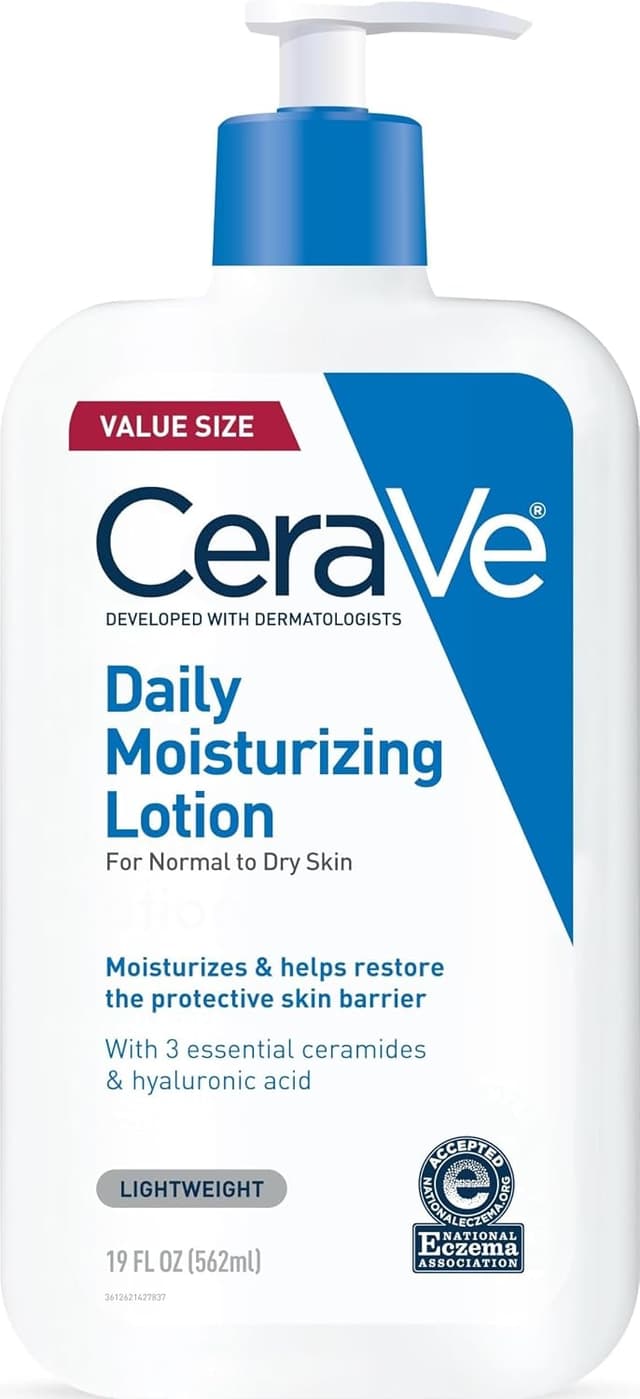
CeraVe Daily Moisturizing Lotion
Three essential ceramides and hyaluronic acid in a lightweight, oil-free lotion. The dermatologist default for dry skin.
The Moisturizers Worth Buying
The Clinique Dramatically Different Moisturizing Gel is the highest-rated of this selection, around $34: an oil-free gel designed precisely for combination to oily skin, and a long-standing reference for a reason.
The Neutrogena Hydro Boost Water Gel remains the accessible classic — hyaluronic acid-based, instantly absorbing, no heavy emollients. It now comes as a refillable starter kit, around $20, with refill pods for the following months.
The Bioderma Hydrabio Gel-Crème, around $31, targets normal to combination skin that is also dehydrated and sensitive — the right pick if the test above pointed toward dehydration. Further up the range, the belif Aqua Bomb pairs niacinamide, hyaluronic acid and squalane in a cooling gel, around $67.
If your skin needs more water than any single cream gives, The Ordinary Natural Moisturizing Factors + HA, under $7, layers underneath any of these without adding weight.
Morning, Night and Seasons
In the morning, a moisturizer doesn't replace sunscreen, and that's often where combination skin gets complicated: rich sunscreens make the T-zone shine. Our six invisible sunscreens under makeup solve exactly that.
At night, keep the same gel-cream and add a more generous layer on your cheeks. In winter, needs shift: the T-zone calms down, the cheeks ask for more, and it's the moment to add a slightly richer texture on the dry zones only rather than switching creams for the whole face. To place your moisturizer in the right order among the other steps, our skincare routine built from zero gives the full sequence.
The Multi-Zone Application Technique
A simple trick many makeup artists use: apply your moisturizer in two passes. First a light layer over the whole face, then a second, more generous layer only on the dry areas — cheeks, temples, around the mouth. This "sandwich" approach lets one product meet the different needs of both zones without buying two creams.
The right moisturizer for combination skin is the one that lets you forget you have combination skin. Pick one balanced gel-cream, use the two-pass method, and give it a few weeks before judging — that's usually all it takes.