Cleansing Balms: The One That Removes Your SPF, and the One That Leaves a Film
The first step of the double cleanse is the one everyone rushes. Three balms compared on what they actually remove, not on how they feel.
Double cleansing has gone from Korean ritual to daily default, and autumn is when it earns its place again: heavier makeup, sunscreen still going on every morning, and skin that needs all of it removed without being stripped. What trips people up is what a balm is actually for.
What a balm dissolves, and what it doesn't wash
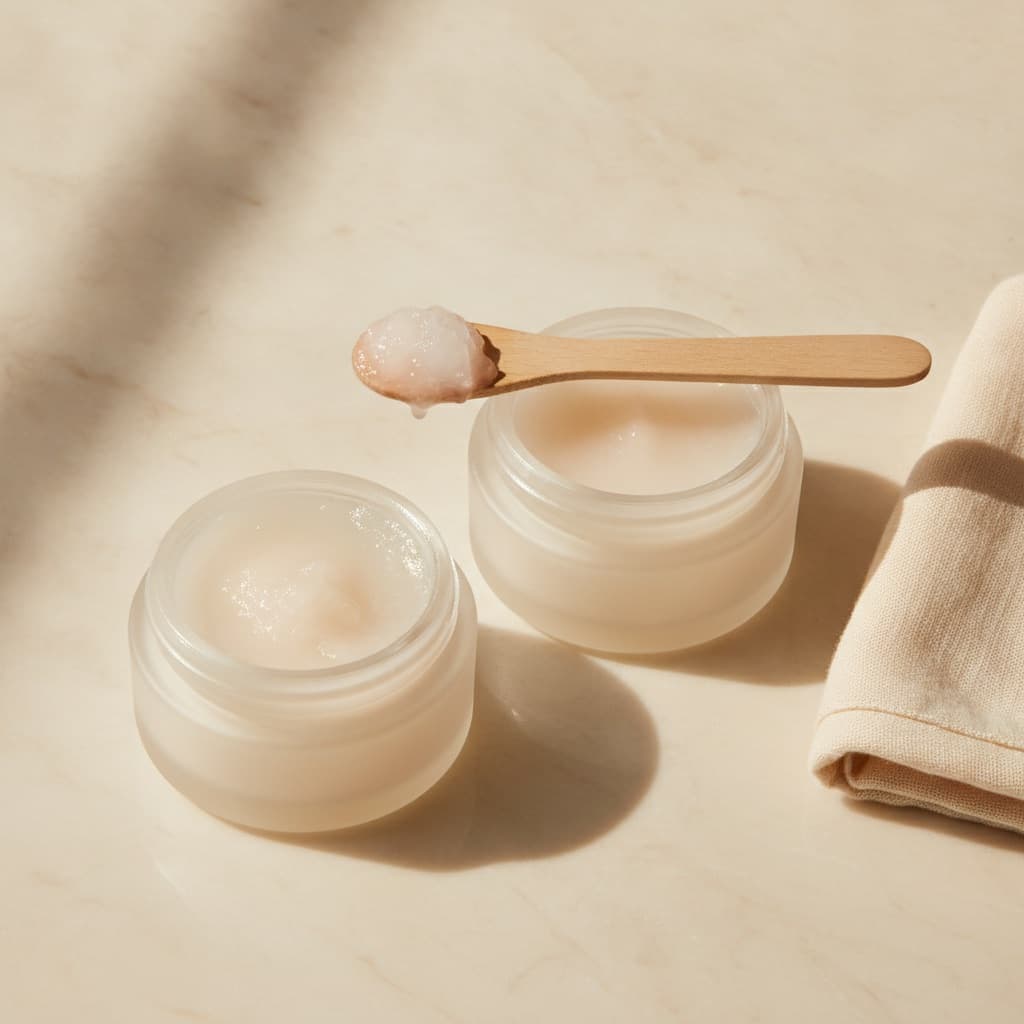
A cleansing balm is not a cleanser. It's a solid oil that melts on contact and dissolves what is itself oily: long-wear makeup, sunscreen filters, the day's sebum. The principle is chemical, not mechanical — like dissolves like.
What it doesn't do is wash. It leaves a mix of oil and everything it just dissolved sitting on the surface, which is exactly why the step is called a double cleanse. Without the gel or foam that follows, you've simply redistributed the day across your face. People who report that balms break them out have almost always skipped the second step.
So the real criterion isn't texture or scent, it's how well it rinses. A balm that emulsifies poorly leaves a veil the next cleanser has to rescue, and on combination skin that veil shows up by the following morning.
What separates the three
Heimish All Clean Balm is the one I'd buy first. It moves from balm to oil to milky emulsion the moment water arrives, which is precisely the behaviour you want, and it doesn't sting when it reaches the eyes — a detail fragranced formulas routinely fail. At around twenty dollars for a hundred and twenty millilitres, it's also the most generous of the three.
The Body Shop Camomile wins on the rinse. It's a butter more than a balm, very melting, and it leaves entirely under warm water without that faintly tacky film some balms abandon on the cheeks. If you've been disappointed by the "clean but not really" feeling, this is the one.
Clinique Take The Day Off plays a different card: fragrance-free, ophthalmologist-tested, built for sensitive eyes and contact lens wearers. It's the most expensive here and it isn't the best rinser — you're paying for tolerance, not for superior performance.
“A cleansing balm is judged under water, not on contact. What matters isn't how it melts, it's what it leaves behind once it's gone.”
The habit that changes everything
Dry hands, dry face. This is the most broken rule in the category. A balm applied to damp skin emulsifies instantly and loses its solvent power before it ever reaches the mascara — you get a lukewarm slurry that removes nothing. Dry your hands before you open the jar.
Then take your time. Sixty seconds of massage isn't indulgence, it's how long oils need to lift a long-wear foundation off skin. Twenty seconds doesn't do it, and that's where the sense that the product is useless comes from.
Finally, emulsify before you rinse: wet your fingers, keep massaging until the balm turns milky, and only then go to the tap. Skipping that step is the single biggest cause of the greasy-film complaint — and it costs nothing.