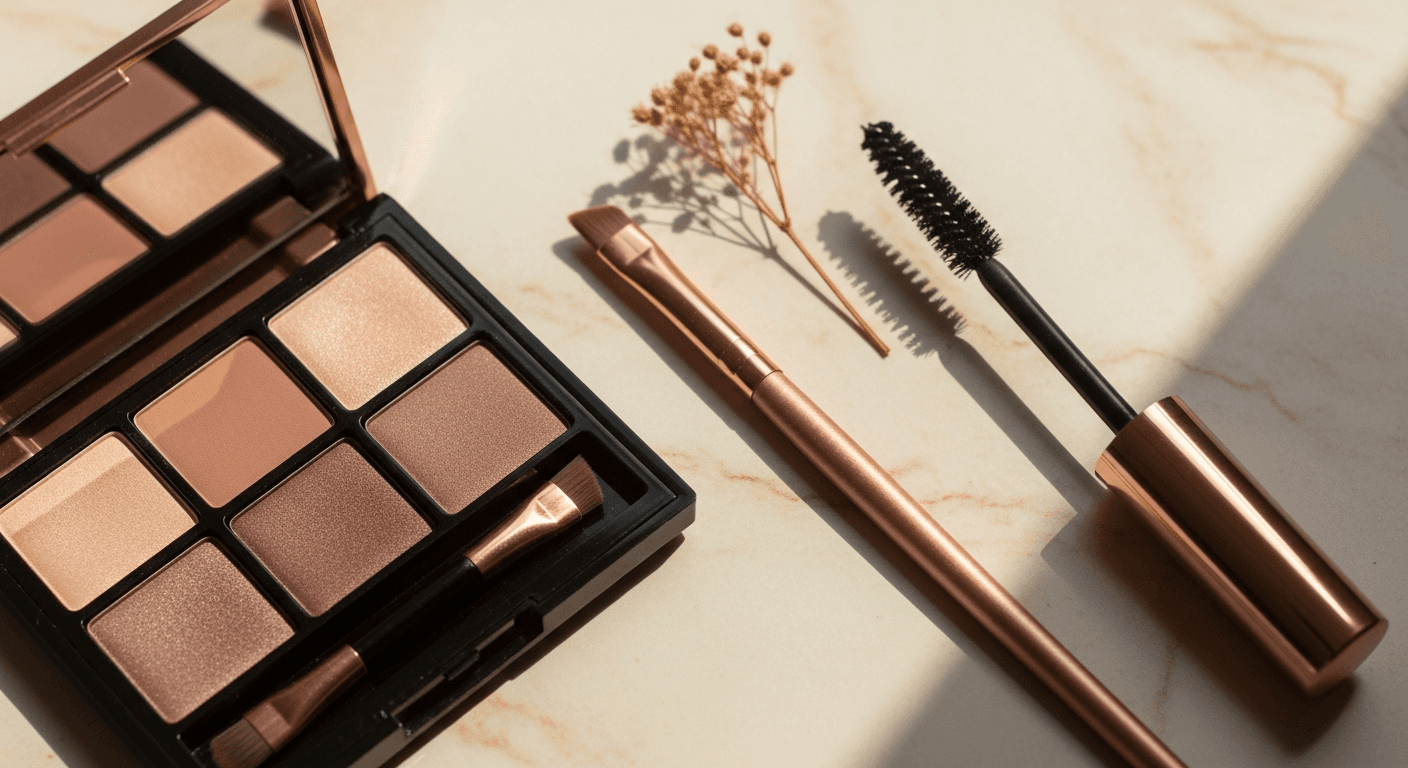
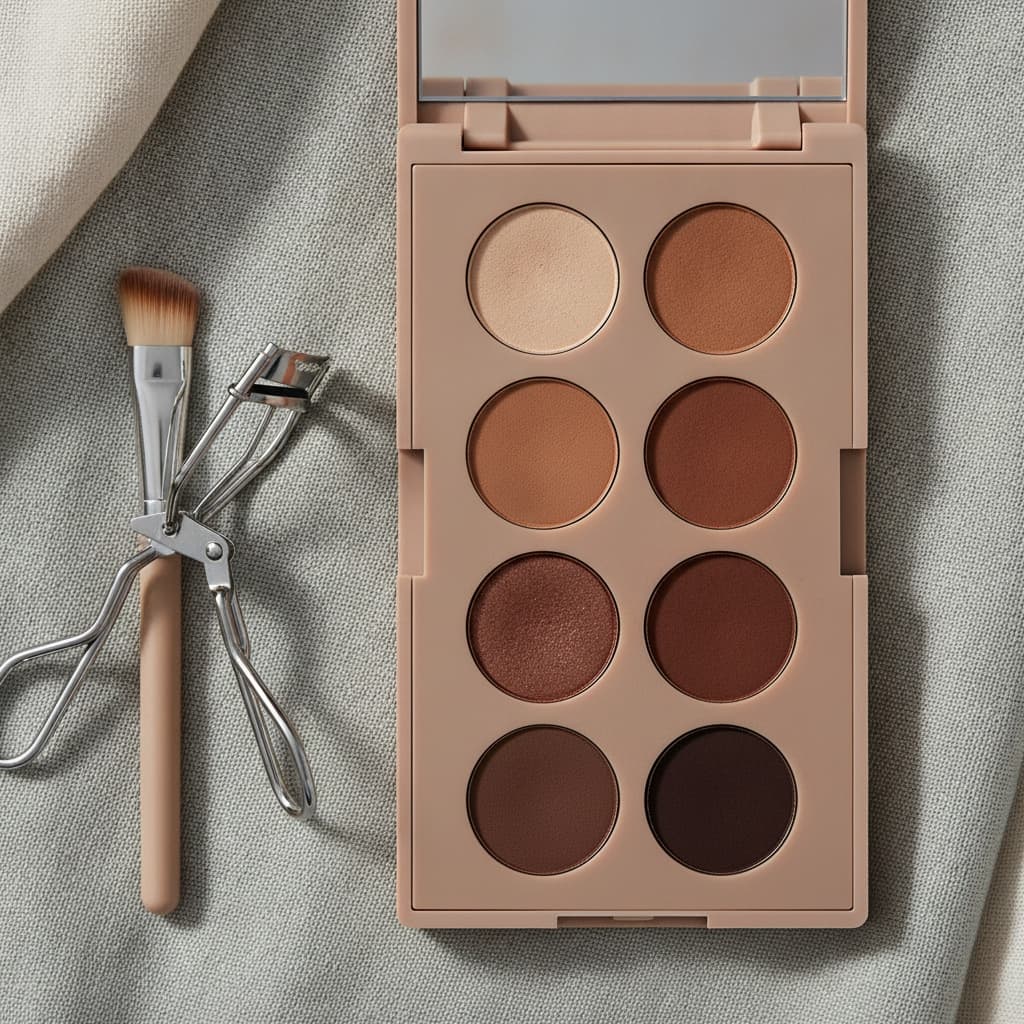
Fuller Brows: The 2026 Trend and the 3 Products That Cover It
The sharp, pigmented arch of the Instagram years is gone. What replaced it needs less product, but a different technique.
The 2026 brow has something in common with this year's complexion makeup: it stopped trying to look perfect. The stencilled arch — crisp edges, uniform colour — that dominated an entire decade has become the most reliable marker of dated makeup.
What actually changed
Three things. Shape first: you follow the bone structure instead of correcting it, with a soft curve and a deliberately airy front rather than a squared-off block. Texture next: hairs are visible, brushed upward, and that controlled disorder is what sells the whole thing. Pigment last, retreating in favour of hold — you set a lot, you colour very little.
In other words, we moved from drawing to styling. That's also what makes the trend accessible: styling costs less and forgives infinitely more than drawing.
“A bad brow in 2016 was an underfilled brow. In 2026, it's an overfilled one. The dial flipped, and most people are still using three times too much product.”
The three products, and what each does
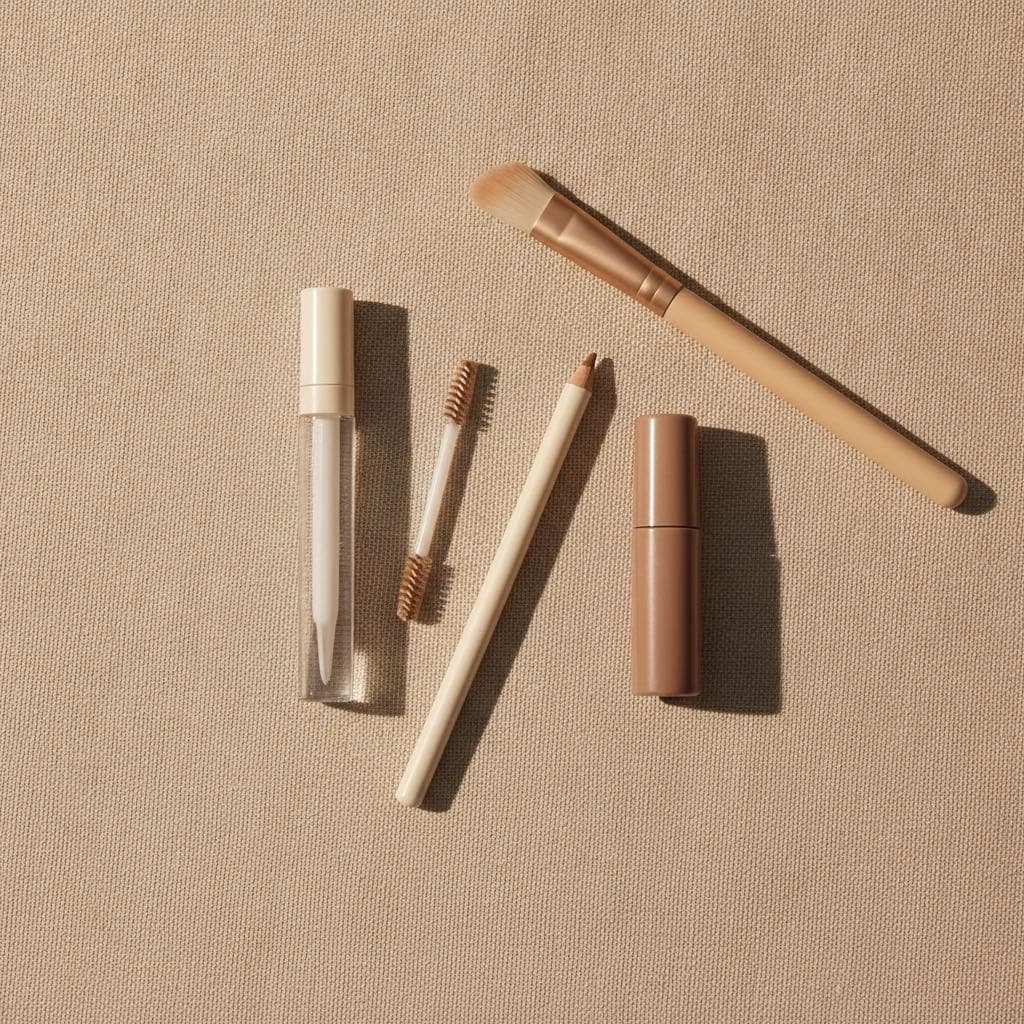
Maybelline Superlock Brow Glue is the heart of the trend. It's a strong-hold clear gel: brush hairs up and outward, they stay put all day. That's the lamination effect for nine dollars instead of a salon appointment, with none of the six-week commitment of a chemical treatment. If you buy one product, make it this one.
Rimmel Brow This Way crayon earns its place where hair is genuinely missing — a sparse patch, a scar, a tail that stops short. At six dollars it's the best value here, provided you use it in small strokes following hair direction, never as a drawn line.
Rimmel Brow This Way mascara sits in between: it tints and sets in one motion, with a softer finish than the clear gel. The right compromise if your brows are dense enough but a little pale, and you want one product rather than two.
What's changed since: growth serums
The segment that has emerged since summer is the growth serum — and it extends this article's conclusion precisely. Rather than drawing in what's missing, you try to grow it back.
The Ordinary Multi-Peptide Lash and Brow Serum is the most credible of the bunch at around fifteen dollars: peptides, caffeine, no prostaglandins — the molecule family that grows lashes in prescription treatments, and that also causes their side effects. Without them, results are more modest and slower: expect four to twelve weeks before seeing a density difference, if you see one.
It's unspectacular, and it's honest. A serum won't recreate a hair where the follicle died after fifteen years of plucking. It thickens what still grows poorly. Patience remains the first tool; the serum supports it.
The mistake that dates everything
The hard edge. The moment the brow boundary becomes a visible border — a sharp line underneath, a squared front above the nose — the face drops back into the 2010s, whatever the product quality.
The fix is simple: after filling, run a clean spoolie over everything to break the edges. You'll lose the crisp look, and that's precisely the point.
The real luxury here is patience. A brow left unplucked for three months beats any fifteen-dollar product — and no brand has any interest in telling you that.